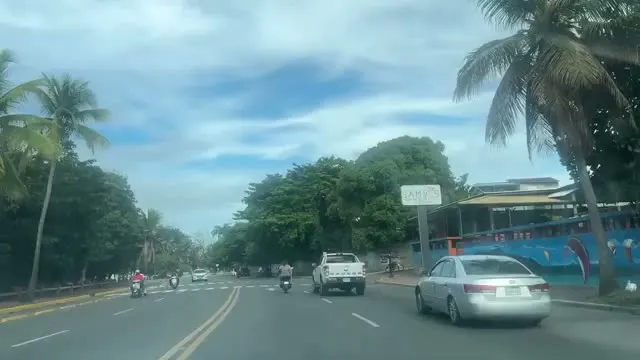
Getting Around Puerto Plata: Taxis, Uber & Local Rides
Getting around Puerto Plata is easy once you know the local rules. You have four main ways to move: taxis, Uber, motorcycle taxis called motoconchos, and shared local rides — guaguas (minivans) and public cars.
One rule covers almost all of them. Agree on the price before the wheels move. Most local rides have no meter.
You may also hear about tension between taxi drivers and Uber drivers in the resort zones. It made local news again this month. Here is what is going on, and how to keep it out of your trip.
The taxi and Uber standoff, explained
On Sunday, October 18, the local news outlet El Atlántico reported that taxi drivers inside the Playa Dorada resort complex stopped an Uber driver from picking up foreign guests. The paper said this is not a one-time thing. It happens often at Playa Dorada, and people there are asking officials to settle it before someone gets hurt.
Two days earlier, Puerto Plata Noticias reported on taxi union leaders speaking on Voz Libre Radio (La Nueva 104.9 FM). The union leaders admitted that taxi drivers get a cut or commissions from some local businesses. They also blamed weak rules and weak enforcement for the fight with app drivers.
Now the legal side, in plain words. Dominican law treats app drivers as taxi operators. Under Ley 63-17 (the 2017 transport law) and the taxi rules in Decree 515-21, drivers who carry tourists for an app must register with INTRANT, the national transport agency. The government's Tourism Cabinet has pushed that registration in tourist zones.
ASONAHORES, the hotel and tourism association, has backed the push for everyone to follow the rules. It has also called on registered taxi drivers to stop defending their turf with street confrontations. The association says the clashes hurt the destination's image and put tourists at risk.
What does this mean for you? Uber works in Puerto Plata, but resort gates are the friction point. At hotels and condo complexes, the local taxi stand may treat pickups as its ground. Your smoothest move is to meet your Uber at the main gate or on the public street — or use the hotel's own transport inside those zones.
Landing at POP: your first ride
Most visitors land at Gregorio Luperón International Airport. Everyone just calls it POP. The airport sits between Puerto Plata and Sosúa, and most stays on this coast are about 15 to 35 minutes away by road.
There is no public bus at the terminal. Your real choices are the airport taxi rank, a pre-booked transfer, a hotel pickupup, an Uber, or a rental car.
The official airport taxis wait at a rank outside arrivals. They run on set rates by zone, and you pay in cash. Recent travel guides list the flat rates at about US$30 to Puerto Plata city or Playa Dorada, US$25 to Sosúa, and US$30 to Cabarete. Rates can change, so confirm your rate at the rank before you ride.
Many resort packages already include the transfer. Check yours before you pay twice. Hotels and condos can also send a driver to meet you. Pre-booked private transfers are easy to book online, and guides put most North Coast rides in the US$25 to US$50 range.
Or skip the rank and the apps, and have one known driver waiting for you. That is what I set up for my own visitors. His name is Juan, and he gets his own section below.
Uber does serve the airport area, but pickup can be hit or miss on a busy day. If you use it, get in the car the app sends — and only that car. Uber itself warns riders not to accept rides from people in the terminal who offer "Uber" trips outside the app.
Taxis: agree the price before you get in
Street and hotel taxis here have no meters. Not one. So the price talk happens before you get in, not after you arrive.
That talk is normal. It is not a trick, and it is not rude to agree out loud. Say where you are going, hear the price, nod, then ride.
In town, a taxi is the priciest way to move, but also the simplest. Travel guides put a ride from the city center out to Playa Dorada at about US$5 to US$10. For a day out, many visitors hire one driver for the whole day through their hotel, with the full price agreed before the day starts.
One more thing worth knowing. Remember those commissions the union leaders admitted to this month? If a driver pushes one gift shop or one restaurant very hardward, that can be why. A polite "no, gracias" is all it takes.
Uber in Puerto Plata: what works, what doesn't
Uber's own Puerto Plata page says UberX runs here 24/7, with the price shown up front in the app. You cannot book a regular taxi through the app in Puerto Plata. UberX is the option.
In the city, Uber is often the calmest choice. The price is set before you ride. There is no cash talk at the curb. Travel guides note that app fares often come in well below a street taxi quote for the same ride.
The weak spot is the pickup. At the airport and at resort gates, local taxi stands hold the ground, and that is where the October clash happened. If your pickup stalls, walk out to the main entrance or the public street and try again. Or let the hotel desk handle that one ride.
Motoconchos: fast, cheap, and not for everyone
Motoconchos are motorcycle taxis. In Puerto Plata, they are a main way locals get around town. Riders wait on corners all over the city, and they will spot you before you spot them.
They are cheap, and they slip through traffic. Transport guides put short hops at about RD$50 to RD$100. Agree the price before you climb on, and carry small bills.
Now the honest part. Helmets are rare. Traffic here is free-form. A motoconcho makes sense for a short, slow hop in daylight, when you are traveling light. It makes no sense with kids, big bags, or after drinks. Trust your gut. If it feels wrong, wave it off and take a car.
Guaguas and public cars: how locals actually move
Stay a while, and you will learn the guagua. Guaguas are shared minivans that run set routes on the main roads. They link Puerto Plata with Sosúa and Cabarete, all day long.
There is no timetable. You stand on the main road, wave one down, and climb in. Tell the cobrador — the fare collector — where you are getting off, and pay in cash. The fares are low. Guides put town-to-town rides at roughly RD$50 to RD$150, by distance. The vans fill up, stop often, and thin out after dark.
Public cars, called carros públicos, work the same way in a sedan. They run fixed routes, like the Puerto Plata–Sosúa cars marked "P-S." You share the car with other riders and pay a set fare for your seat.
Both rides are crowded. Both are deeply local, and that is the charm. Before your first ride, ask your hotel staff or a local friend what the fare should be. Then pay close to what the locals next to you pay.
Hotels, private drivers, and day trips
Resorts run shuttles and can book a taxi at the front desk. It may cost a bit more, but the ride is sorted with no Spanish and no haggling. For a lot of guests, that trade is worth it.
For day trips, a known private driver is the local sweet spot. Your hotel or host sets it up. You agree on the route, the stops, and the full price before the day starts. Most tours also include hotel pickup, so check that before you book a separate ride.
Headed to Monkey Jungle? The road up is rough and steep, and we say the same thing in our Monkey Jungle guide: let a local driver handle that road.
Going farther? Caribe Tours and Metro run air-conditioned coaches between Puerto Plata, Santiago, and Santo Domingo. And yes, the big rental car brands are at the airport — but local driving is bold. Rent a car only if you are a calm, defensive driver.
My guy in Puerto Plata: Juan
Everything above works. But the smoothest ride in Puerto Plata is a person, not an app.
When people ask me who to call, the first name I give them is Juan. He drives full time here in Puerto Plata, and he is the driver I trust with my own visitors.
Juan speaks English, so there is no language gap at the curb. Let him know in advance that I sent you, and if he is able, he will take care of you.
Airport pickup, a ride across town, or a full day out with stops — one known driver beats five unknown rides, every time.
If Juan is not available, reach out to me. I have several other drivers who are just as good, and I will point you to one.
You can reach Juan through the taxi service section of my Local Services page. Book him before you land, and your first ride in Puerto Plata is already handled.
Match the ride to the trip
Airport to resort, bags in hand: airport taxi, hotel pickup, a pre-booked transfer — or Juan, booked ahead (above).
Around the city by day: Uber, a taxi with an agreed price, or a motoconcho for a short hop.
Puerto Plata to Sosúa or Cabarete on a budget: a guagua or a public car.
A full day out with stops: one private driver, one price, agreed before you start.
Late at night: a ride set up by your hotel, or a driver you already know.
Six rules that keep rides stress-free
Agree the price before the ride starts — taxi, motoconcho, or private driver.
Carry small bills in pesos. Many rides are cash only.
If an app pickup stalls at a resort, meet your ride at the main gate.
Only get in the Uber the app sends you. Skip anyone offering off-app rides.
Ask locals what a route should cost. Local prices are known prices.
Skip the motoconcho with kids, luggage, or after drinks.
Questions people ask
Is Uber legal in Puerto Plata?
Uber operates here, and its own page says UberX runs 24/7. Dominican law requires app drivers to register with INTRANT to work in tourist zones, and that registration fight is what sits behind the headlines. As a rider, you can use the app — just expect some friction at resort gates.
How much is a taxi from Puerto Plata airport to my hotel?
Airport taxis run on set zone rates, paid in cash. Recent guides list about US$30 to Puerto Plata city or Playa Dorada, US$25 to Sosúa, and US$30 to Cabarete. Confirm the rate at the rank before you ride — and check whether your resort package already includes the transfer.
Do taxis in Puerto Plata take cards or US dollars?
Plan on cash. Airport taxi drivers commonly take US dollars, and in town, pesos are the simplest. Uber is the exception: it charges through the app, so there is no cash talk at all.
What is a motoconcho, and is it safe?
A motoconcho is a motorcycle taxi — the fastest, cheapest way locals cross town. Transport guides put short hops at about RD$50 to RD$100. Helmets are rare, though, so keep it to short daylight hops, agree the price first, and skip it with kids or luggage.
What is the cheapest way to get from Puerto Plata to Sosúa or Cabarete?
Take a guagua or a public car on the main road. Guides put the fare at roughly RD$50 to RD$150 by distance. Flag one down, tell the fare collector your stop, and pay in cash with small bills.
Plan the rest of the trip
Once your rides are sorted, the good part starts. Eat where the locals eat — start with Como en Familia and Comedor El Campito Tropical — then plan your days in the Visit and Tours sections at drpuertoplata.com.
And before you fly, grab the free Puerto Plata travel checklist at drpuertoplata.com. It covers the things first-timers always wish they had known. If you want a local in your corner while you plan, that is what we are here for.
